Choosing the correct pixel pitch is one of the most important steps when planning an LED display project. Pixel pitch directly affects image clarity, viewing experience, installation cost, and overall display performance.
For different applications, such as control rooms, meeting rooms, retail stores, advertising screens, stadiums, and outdoor billboards, the ideal pixel pitch can be completely different.
Selecting a smaller pixel pitch does not always mean a better solution. The right choice depends on several technical factors, including viewing distance, screen size, application environment, content type, and project budget.
This guide explains how to choose the right pixel pitch for an LED display and helps customers make a suitable technical decision before installation.
What Is Pixel Pitch in an LED Display?
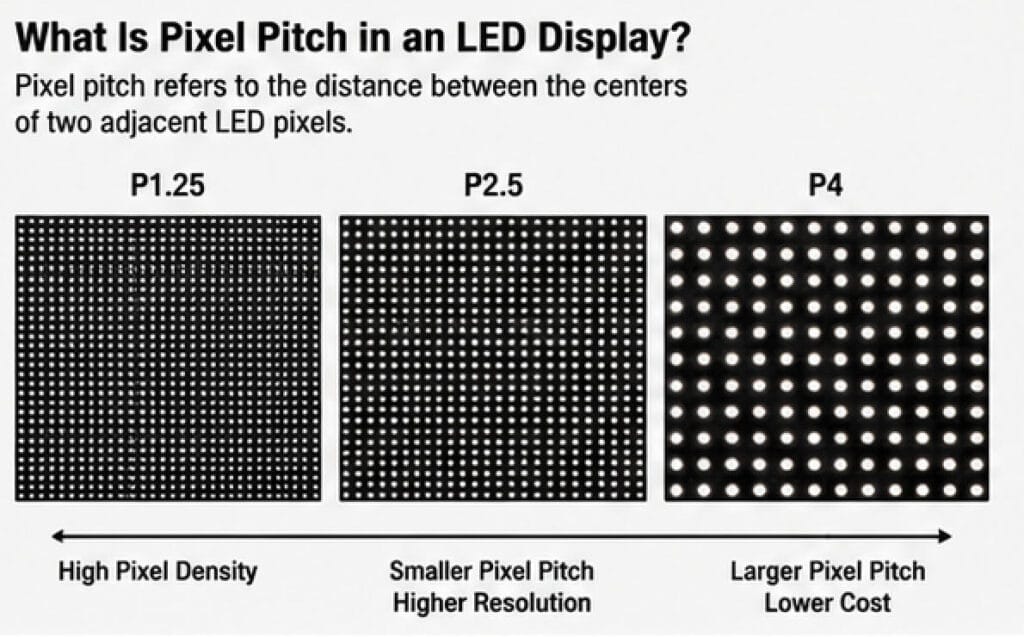
Pixel pitch refers to the distance between the centers of two adjacent LED pixels, usually measured in millimeters (mm).
For example:
- P1.25 means the distance between pixels is 1.25mm
- P2.5 means the distance between pixels is 2.5mm
- P4 means the distance between pixels is 4mm
A smaller pixel pitch means more LED pixels are installed within the same display area, creating higher pixel density and better image detail.
A larger pixel pitch provides a more economical solution for applications where viewers are farther away.
The relationship is simple:
Smaller pixel pitch = higher resolution + closer viewing distance
Larger pixel pitch = lower cost + longer viewing distance
Why Pixel Pitch Matters for LED Display Selection
Pixel pitch affects several key performance factors:
1. Image Resolution
Pixel pitch determines the total number of pixels available on the LED screen.
A smaller pixel pitch creates higher resolution images, allowing viewers to see more details, text, and graphics clearly.
For applications such as:
- command centers
- conference rooms
- broadcast studios
- premium retail displays
a fine pitch LED display is usually recommended because users often view the screen at a close distance.
Meitec provides fine pitch LED display solutions designed for high-definition applications where image accuracy and visual details are important. You can learn more about our Fine Pitch LED Display solutions.
2. Viewing Distance
Viewing distance is one of the most important factors when selecting pixel pitch.
A common industry reference is:
Minimum viewing distance (meters) ≈ Pixel pitch (mm)
For example:
- P1.5 LED display → suitable for viewers from approximately 1.5 meters away
- P3 LED display → suitable for viewers from approximately 3 meters away
- P6 LED display → suitable for viewers from approximately 6 meters away
However, this is only a general guideline. The actual selection should also consider screen size, content type, and viewing environment.
How to Select Pixel Pitch Based on Application
Different environments require different pixel pitch solutions.

Indoor LED Display Applications
Indoor environments usually have shorter viewing distances and higher requirements for image quality.
Recommended pixel pitch:
| Application | Recommended Pixel Pitch |
|---|---|
| Meeting room | P0.9 – P1.8 |
| Control room | P0.9 – P1.5 |
| Retail store | P1.5 – P3 |
| Exhibition hall | P1.5 – P3.9 |
| Commercial advertising | P2 – P4 |
For close-view applications, choosing a smaller pixel pitch helps avoid visible pixel structure and improves the viewing experience.
Meitec indoor LED display solutions are designed for professional commercial environments requiring slim design, high brightness consistency, and stable operation.
Outdoor LED Display Applications
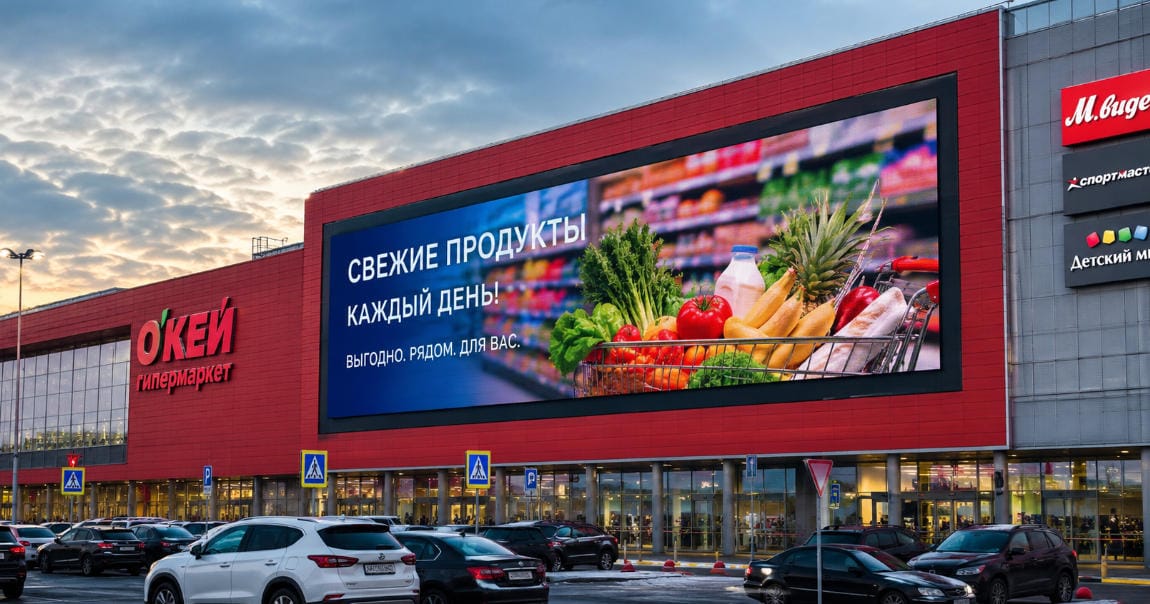
Outdoor LED displays usually require higher brightness and longer viewing distances.
Recommended pixel pitch:
| Application | Recommended Pixel Pitch |
|---|---|
| Outdoor advertising board | P6 – P10 |
| Building facade display | P8 – P16 |
| Stadium screen | P6 – P10 |
| Transportation display | P4 – P8 |
Outdoor projects normally prioritize brightness, durability, and viewing distance rather than extremely high pixel density.
Pixel Pitch Selection Factors You Should Consider
Choosing pixel pitch should not rely only on resolution requirements. The following factors should also be evaluated.
1. Viewing Distance
The closer the audience is, the smaller the pixel pitch should be.
Before selecting an LED display, confirm:
- Minimum viewing distance
- Average viewing distance
- Maximum viewing distance
This helps determine the appropriate resolution level.
2. Screen Size
A larger LED screen requires more pixels to maintain image quality.
For example:
A P2 LED display can provide excellent image quality on a small indoor screen, but a large outdoor billboard may require a different pixel pitch because viewers are much farther away.
3. Display Content
Different content requires different resolution levels.
For example:
High-detail content:
- product images
- presentations
- videos
- dashboards
requires a smaller pixel pitch.
Simple content:
- advertisements
- logos
- text messages
can use a larger pixel pitch.
4. Installation Environment
The environment also influences pixel pitch selection.
Consider:
- Indoor or outdoor installation
- Ambient brightness
- Viewing angle requirements
- Installation height
- Maintenance accessibility
For example, outdoor LED displays need higher brightness and weather resistance, while indoor applications usually focus more on resolution and visual comfort.
Common Mistakes When Choosing Pixel Pitch
Choosing the Smallest Pixel Pitch Automatically
A smaller pixel pitch increases resolution, but it also increases project cost.
If viewers are several meters away, an ultra-fine pitch display may not provide noticeable visual improvement.
The correct solution should balance:
- image quality
- viewing distance
- project budget
- application requirements
Ignoring Future Usage Requirements
Some customers select pixel pitch only based on current content.
However, LED displays often operate for many years. Future requirements such as higher-resolution videos, interactive applications, or upgraded content should also be considered.
Focusing Only on Pixel Pitch
Pixel pitch is important, but it is not the only factor affecting display performance.
A complete LED display evaluation should include:
- LED quality
- refresh rate
- brightness
- grayscale performance
- cabinet structure
- heat management
- maintenance design
Meitec Recommendation Process for Pixel Pitch Selection
To select the right LED display solution, Meitec recommends evaluating projects through the following steps:
Step 1: Define Application
Identify where the LED display will be installed:
- indoor commercial display
- outdoor advertising
- control center
- conference room
- rental event
- creative LED project
Step 2: Confirm Viewing Distance
Measure the closest audience distance and expected viewing position.
This determines the suitable pixel pitch range.
Step 3: Calculate Screen Resolution
Check whether the selected pixel pitch can provide sufficient resolution for your required content.
Step 4: Select the Appropriate LED Display Series
Based on the application requirements, customers can choose from different Meitec LED display solutions, including standard displays, fine pitch displays, COB displays, and creative LED solutions.

FAQ About LED Display Pixel Pitch
Is smaller pixel pitch always better?
No. Smaller pixel pitch provides higher resolution but increases cost. The best choice depends on viewing distance and application requirements.
What pixel pitch is suitable for indoor LED displays?
Indoor applications commonly use P0.9 to P3.9 depending on viewing distance and image requirements.
What pixel pitch is suitable for outdoor LED screens?
Outdoor LED displays commonly use P4 to P16 because viewers are usually farther away.
How do I calculate the correct pixel pitch?
Consider viewing distance, screen size, content requirements, and installation environment. A professional LED supplier can help calculate the most suitable specification.
Conclusion
Choosing the right pixel pitch is essential for achieving the best balance between image quality, viewing experience, and project investment.
The ideal pixel pitch is not always the smallest option. A successful LED display project requires matching pixel pitch with application scenarios, viewing distance, and long-term usage requirements.
With professional LED display experience and complete product solutions, Meitec helps customers select the right display technology for different commercial and industrial applications.
For a customized recommendation, contact the Meitec technical team for project evaluation.