For restaurants, sports bars, lounges, and entertainment venues, a display is no longer simply a screen for showing content. During live matches and major sporting events, it becomes one of the most important visual elements in the entire space.
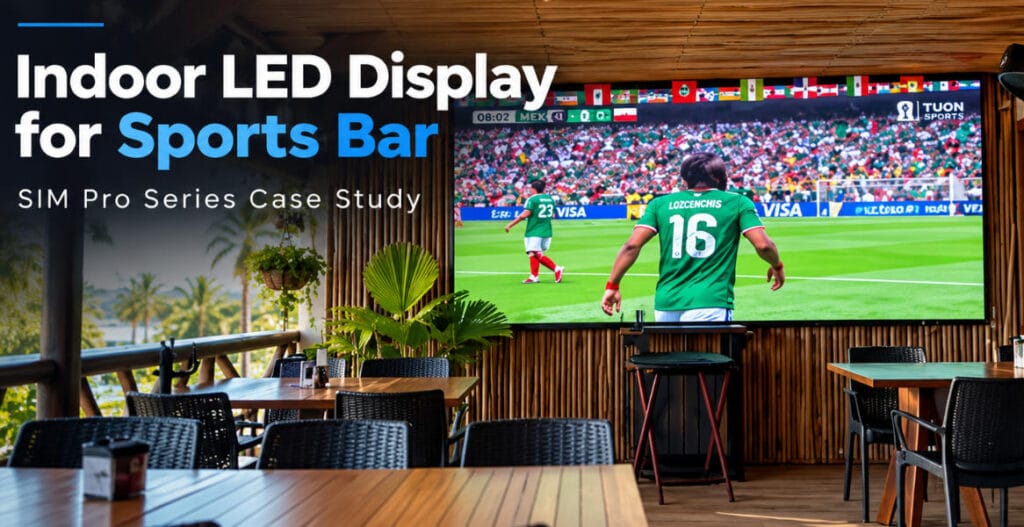
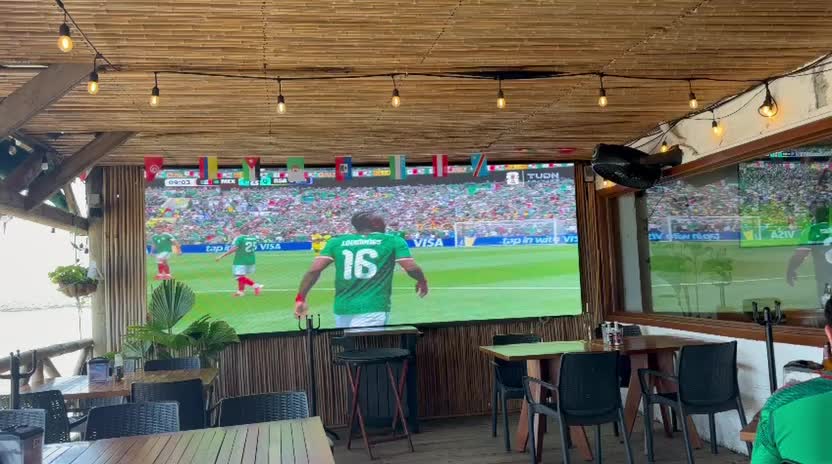
In this real indoor hospitality project, the venue needed a larger and more immersive display solution for live football broadcasts. Conventional televisions could provide basic viewing, but they could not create the scale, shared atmosphere, or visual impact the operator wanted.
MEITEC supplied a SIM Pro Series indoor small pixel pitch LED display, creating a seamless large-format screen that allows guests across the venue to follow live sports content clearly and comfortably.
The finished screen is now used for live football matches, entertainment programming, promotional content, and other digital media.
Project Type: Restaurant / Sports Bar
Application: Live Sports Broadcasting & Entertainment
Display Solution: SIM Pro Series Indoor Small Pixel Pitch LED Display
Installation Type: Fixed Indoor Installation
Project Location: Withheld
Project Status: Completed
The Challenge: A Larger Screen Without the Limitations of Conventional TVs
In a sports-oriented restaurant or bar, screen size has a direct impact on the viewing experience.
Guests may be seated at different tables, at different angles, and at different distances from the display. A conventional TV can work well for a small group, but once the viewing area becomes larger, it becomes harder for everyone to follow the same content comfortably.
Using several televisions can solve part of the problem, but it also creates a fragmented viewing experience.
The venue wanted one large visual focal point that could:
- display live football and sports content clearly;
- be visible from multiple seating positions;
- provide smooth motion for fast-moving video;
- eliminate obvious screen bezels;
- integrate cleanly with the existing interior;
- and remain easy to maintain over long-term commercial operation.
This made an indoor small pixel pitch LED display a more suitable solution than multiple conventional TVs.
Why the SIM Pro Series Was Selected
The SIM Pro Series is designed for professional indoor applications requiring close viewing, high image detail, smooth video playback, and flexible installation. It offers pixel pitch options from P0.9375 to P1.875 and supports high refresh rates up to 7680Hz.
For this project, several features were particularly relevant.
1. A Seamless Large Screen for a Shared Viewing Experience
One of the biggest advantages of LED technology is the ability to create a large display without the visible bezels associated with LCD video walls.
The SIM Pro Series uses precision die-cast aluminum cabinets designed for accurate alignment and seamless cabinet connection. Multiple cabinets can be combined into a much larger display surface while maintaining image continuity.
In a sports bar environment, this means customers are not watching a match across multiple separated screens.
Instead, the content appears as one continuous image.
For football broadcasts in particular, this helps preserve the full field view, score graphics, player movement, and camera transitions without visual interruptions between panels.
2. Small Pixel Pitch Improves Close-Range Viewing
Unlike large outdoor LED screens, hospitality venues often place viewers relatively close to the display.
That makes pixel density important.
The SIM Pro Series provides P0.9375, P1.25, P1.56, and P1.875 configurations, allowing the screen to be selected according to viewing distance, screen dimensions, and resolution requirements.
For a restaurant or sports bar, a fine-pitch configuration helps maintain image detail even when customers sit relatively close to the screen.
This is particularly noticeable with:
- scoreboards;
- player names;
- subtitles;
- advertising graphics;
- team logos;
- and other fine on-screen information.
Instead of seeing individual LED pixels, viewers perceive a more continuous image.
3. High Refresh Rate for Fast Sports Content
Live sports contain constant movement.
Players move quickly across the field, cameras pan rapidly, replay footage changes direction, and broadcast graphics frequently appear and disappear.
The SIM Pro Series supports 3840Hz or 7680Hz refresh rates, depending on configuration.
A high refresh rate helps maintain smooth motion performance and reduces visible scan-line effects, particularly when the screen is captured on cameras or mobile phones.
For a venue where customers may photograph or record parts of a match, this can also contribute to a cleaner-looking screen in user-generated content.
4. Wide Viewing Angle for Multiple Seating Positions
A screen in a hospitality venue is rarely viewed only from directly in front.
Customers may sit at tables to the left or right of the display, which makes off-axis image consistency important.
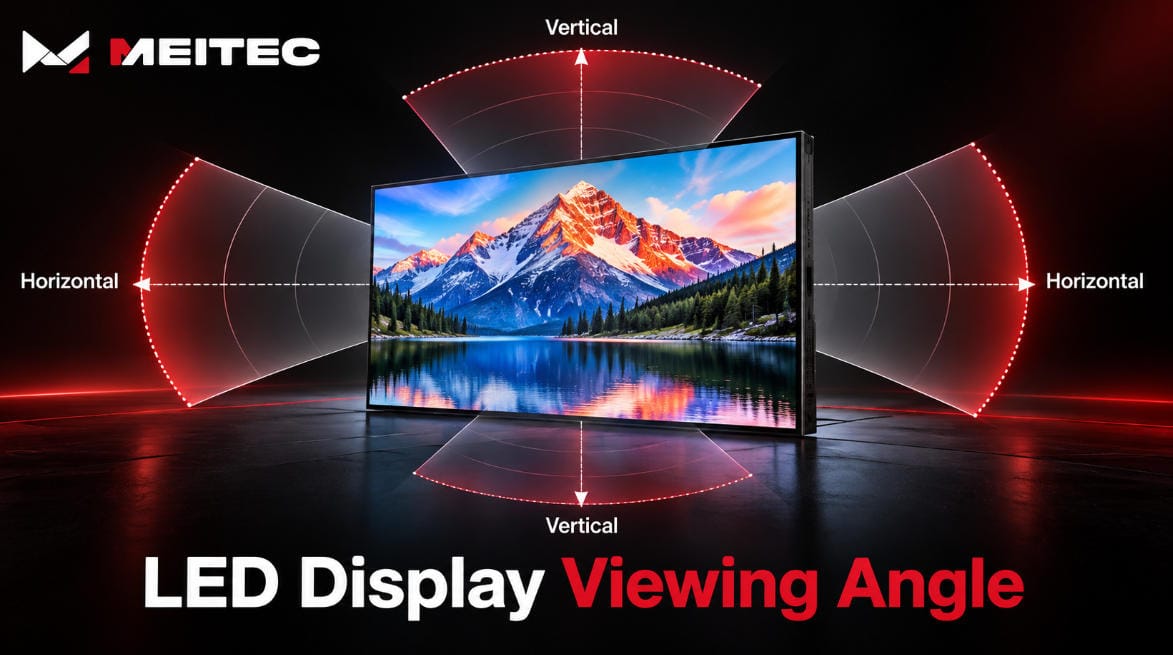
The SIM Pro Series specifies a 170° horizontal and 170° vertical viewing angle.
This helps provide a wider effective viewing area so more customers can see the content clearly without needing to sit directly in front of the screen.
For a restaurant or sports bar, this improves the usefulness of the display across the entire seating layout rather than only a few central tables.
5. High Contrast for More Detailed Indoor Images
The SIM Pro Series specifies a contrast ratio of up to 15000:1.
In an indoor environment, strong contrast helps distinguish darker and brighter areas of an image more clearly.
This is useful not only for sports broadcasts but also for:
- promotional videos;
- food photography;
- branded content;
- event graphics;
- advertisements;
- and entertainment programming.
A higher contrast display can make content appear more defined, especially in indoor environments where viewers are relatively close to the screen.
6. A Slim Structure That Fits the Interior More Naturally
A commercial display should not look like an oversized technical installation added after the room was finished.
The SIM Pro Series cabinet is only 27.5 mm thick, with each cabinet weighing approximately 4.5 kg.
The slim die-cast aluminum structure helps reduce the depth of the installation and allows the LED screen to integrate more cleanly into interior walls and decorative structures.
In this project, the screen was positioned as a wide-format visual centerpiece at the front of the hospitality space.
The result is a large viewing area without excessively reducing usable floor space.
7. Front Maintenance Supports Long-Term Commercial Operation
For a restaurant or bar, maintenance accessibility matters.
A screen may operate for many hours each day, and service work should ideally cause as little disruption as possible.
The SIM Pro Series uses a front-maintenance structure, allowing modules and components to be accessed from the front of the display.
This reduces the need for large rear service spaces and can simplify maintenance in wall-mounted indoor installations.
For venues where every square meter matters, this is an important practical advantage.
8. Energy Efficiency Matters in a Screen That Runs for Hours
Commercial displays may operate throughout opening hours rather than only during special events.
The SIM Pro Series uses common cathode energy-saving technology, which is designed to reduce power consumption while maintaining stable display performance.
The product specification lists approximately 100 W/m² average power consumption, depending on operating conditions and configuration.
For a permanent indoor installation, lower energy consumption can help reduce long-term operating costs and heat generation.
The Result: The Display Became Part of the Venue Experience
After installation, the most important improvement was not simply a larger picture.
It was the change in how customers could experience live sports together.
Instead of different tables watching separate televisions, the large LED screen creates a common visual focal point.
During a football match, customers across the venue can follow the same action, react to the same moments, and experience the event more collectively.
This is particularly valuable for hospitality venues that use major sporting events to attract customers.
The screen also remains useful when no match is being shown.
It can display:
- food and beverage promotions;
- upcoming events;
- branded content;
- sponsor advertising;
- music videos;
- social media content;
- seasonal campaigns;
- and other entertainment programming.
This makes the LED display a multi-purpose commercial asset rather than a screen used only during sports events.
More Than a Bigger TV
This project also illustrates an important difference between a professional LED display and a conventional television.
The objective was not simply to make the picture larger.
The venue needed a screen that could become part of the space itself.
A small-pixel-pitch LED display provides greater flexibility in screen dimensions, supports seamless multi-cabinet installation, and can be designed around the available wall area rather than being limited to standard TV sizes.
For restaurants, sports bars, lounges, clubs, entertainment venues, and similar indoor spaces, that flexibility can make it easier to create a display that matches both the architecture and the intended viewing experience.
Why the SIM Pro Series Fits Indoor Hospitality Applications
Although the SIM Pro Series is also designed for professional environments such as control rooms, conference rooms, broadcast studios, and exhibition displays, its technical characteristics can also be valuable in premium hospitality spaces. The combination of fine pixel pitch, seamless cabinet construction, wide viewing angles, high refresh rate, front maintenance, and flexible installation makes it suitable for indoor commercial projects where image quality and close-range viewing are important.
For projects with similar requirements, MEITEC can help determine the appropriate pixel pitch, display dimensions, screen resolution, brightness configuration, installation structure, and control system based on the actual environment.
Explore the SIM Pro Series Indoor Small Pixel Pitch LED Display for detailed specifications and configuration options.